You lift your mattress to rotate it, and there it is — dark patches spreading across the underside, a musty smell that hits you before you even get close. Mould on your mattress is not just unpleasant. It’s a genuine health hazard, and in Australian homes, it’s far more common than most people realise.
Here’s the problem most people don’t know: a single adult loses up to 500ml of sweat per night. That moisture has to go somewhere. In poorly ventilated bedrooms — which describes a large number of homes across Melbourne, Sydney, Brisbane, and Perth — it soaks into your mattress and creates exactly the warm, damp environment that mould spores need to grow.
By the time you can see mould on your mattress, the problem is already well established. Black mould, white mould, green patches, that distinctive mildew smell — these are all signs that fungal growth has taken hold inside the foam, fibres, or springs of your bed. And sleeping on a mouldy mattress every night means breathing in those spores for seven or eight hours straight.
This guide covers everything you need to act quickly and correctly. You’ll learn why mould grows on mattresses, what the real health risks are, how to assess whether your mattress can be saved, the right way to clean mould off a mattress safely, when to call a professional mattress cleaning service, and how to squality it from coming back.
Start with the most important question: why does mould grow on mattresses in the first place — and why are Australian homes particularly vulnerable?
Why Mould Grows on Mattresses (And Why Australian Homes Are Especially Vulnerable)
Mould on a mattress isn’t a sign that you’re a bad housekeeper. It’s a sign that moisture has built up somewhere it can’t escape — and your mattress became the casualty. Mould spores are always present in the air. All they need to colonise your bed is warmth, a food source (dead skin cells, dust), and moisture. A mattress ticks all three boxes every single night.
The problem starts underneath. Most mattresses sit on a base, platform, or slatted bed frame that restricts airflow. Body heat pushes moisture downward during sleep. That moisture has nowhere to go — so it sits at the base of the mattress, creating the exact damp, warm conditions mould needs to grow. By the time you see black mould spots on the mattress surface or notice that distinctive musty smell, the colony underneath is often already well established.
Why Australian Homes Make This Worse
Australia’s climate creates conditions that accelerate mattress mould growth faster than most homeowners expect. Coastal cities like Sydney, Brisbane, and Melbourne experience high ambient humidity for months at a time. In Queensland and northern New South Wales, summer humidity regularly sits above 70% — the threshold at which mould growth becomes nearly inevitable on porous surfaces without proper ventilation.
Older homes with poor cross-ventilation, modern apartments with sealed windows, and bedrooms without ceiling fans all trap humid air directly around the bed. Add a memory foam mattress — which absorbs and holds moisture more readily than innerspring designs — and you have a near-perfect environment for mattress mould and mildew to develop year-round.
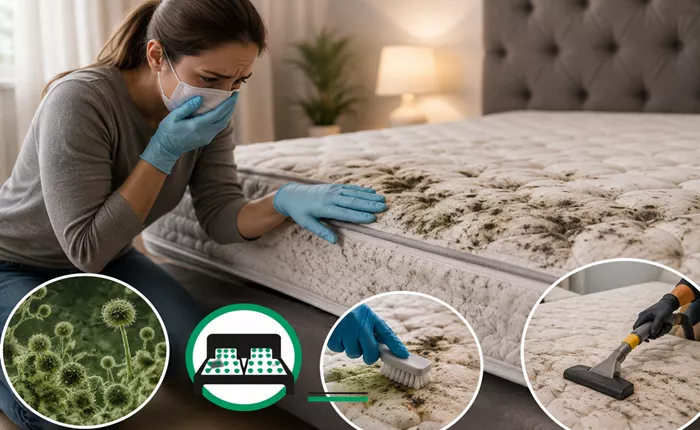 Common Warning Signs You Have a Mould Problem
Mould on a mattress doesn’t always announce itself with big black patches. In many cases, the signs are subtle — and easy to mistake for normal wear and dirt. Knowing what to look for early can save your mattress and protect your health.
- Visible spots or patches: Black, green, or white mould on mattress surfaces is the most obvious sign. Black mould tends to appear in clusters of dark spots, while white mould looks powdery or fuzzy and is often mistaken for dust or dried residue.
- A persistent musty smell: That stale, earthy odour that won’t go away after airing your bedroom is a classic sign of mattress mildew. The smell comes from mould spores releasing gases as they grow — and it gets worse in humid conditions.
- Mould under the mattress or on the base: Flip your mattress regularly. Mould under a mattress — especially on slatted bed bases — is extremely common in Australian homes during summer and in humid coastal regions like Queensland and northern NSW.
- Allergy or respiratory symptoms that worsen in bed: Waking up with a stuffy nose, itchy eyes, or a sore throat that clears during the day is a red flag. Sleeping on a mouldy mattress exposes you to airborne spores all night long.
- Damp or clammy feel to the mattress surface: A mattress that never quite feels dry — particularly memory foam mattresses, which trap moisture — is a breeding ground for mattress fungus and mould growth.
If you’re unsure whether what you’re seeing is mould or just a stain, do a quick smell test — mould has a distinctive musty odour that regular dirt doesn’t. You can also check whether spots feel slightly raised or fuzzy to the touch, which indicates active mould growth rather than a surface mark. For ongoing bedroom moisture issues, it’s also worth checking other soft furnishings — dirty curtains can affect indoor air quality in the same room and contribute to a damp environment that accelerates mattress mould growth.
Mouldy Mattress Health Risks: What Sleeping on Mould Actually Does to You
Sleeping on a mouldy mattress isn’t just unpleasant — it’s a genuine health hazard. Every night you spend on a mould-contaminated surface, you’re breathing in fungal spores at close range for 7–8 hours straight. That kind of repeated exposure adds up fast.
Mould spores trigger respiratory problems even in otherwise healthy people. You might notice a persistent cough, blocked sinuses, or a scratchy throat that never quite goes away. For anyone with asthma, hay fever, or a compromised immune system, the reaction can be far more severe — including asthma attacks, chronic bronchitis, and recurring chest infections.
Skin and eye irritation are also common. Direct contact with mould on your mattress can cause rashes, itching, and redness — especially in children, whose skin is more sensitive. If your eyes are watering or itchy every morning for no obvious reason, your mattress deserves a close look.
The real danger comes from black mould (Stachybotrys chartarum) and other toxic species that can colonise a damp mattress. These produce mycotoxins — compounds that affect the nervous system and have been linked to headaches, fatigue, and difficulty concentrating with prolonged exposure. Pregnant women and young children face the highest risk from toxic mould exposure in the bedroom.
It’s worth separating white mould and mildew from the more dangerous black varieties. White mould and mildew are early-stage growth and less toxic, but they still cause allergic reactions and will progress to more harmful species if left untreated. No mould on a mattress is “safe” mould.
Pro Tip: If you’re waking up congested, sneezing, or with a headache every morning but feel fine once you leave the house, lift your mattress and check underneath immediately. Morning symptoms that clear up during the day are a classic sign of overnight mould exposure in the bedroom.
Special Guidance: Mould on Baby and Children’s Mattresses
Mould on a child’s mattress is a more serious problem than it is on an adult’s. Children — especially babies and toddlers — breathe faster than adults, which means they inhale more air per kilogram of body weight. A mattress with even a small mould patch can expose a young child to a concentrated dose of mould spores every single night.
Why Children Are More Vulnerable to Mould Exposure
Kids’ immune systems are still developing. Prolonged exposure to black mould or white mould on a mattress can trigger respiratory issues, skin rashes, persistent coughing, and in sensitive children, early-onset asthma. Babies sleeping face-down on a mouldy surface face the highest risk. This isn’t a situation where a quick wipe-down and a sunny day will fix things.
Pro Tip: If you spot any mould — even a single small patch — on a baby or toddler’s mattress, treat it as a replacement situation first, not a cleaning situation. The risk-to-reward ratio of keeping a mouldy kids’ mattress simply doesn’t stack up.
What to Do Immediately
- Remove the child from the room straight away and don’t let them sleep on the mattress until it’s been assessed.
- Don’t scrub or vacuum the mould indoors — this releases spores into the air and makes the problem worse.
- Check the mattress base and surrounding area — mould under the mattress is common in children’s beds, especially bunk beds and low-to-the-floor frames with poor airflow.
- Inspect the mattress protector — if it’s waterproof but mould has grown underneath it, moisture has been trapped for a long time. Choosing the right best mattress protectors for Australian conditions going forward makes a real difference.
When to Replace vs. When to Clean
For adult mattresses, professional cleaning is often a viable option. For children’s mattresses — particularly cots and toddler beds — replacement is almost always the safer call. Children’s mattresses are generally less expensive than adult mattresses, and the health risk doesn’t justify trying to salvage a heavily mould-affected one.
If the mould is very minor (a few small spots, caught early) and the mattress is otherwise in good condition, a professional mattress sanitisation service using hot steam treatment may be appropriate. Always confirm the technician uses child-safe, non-toxic products before booking.
How to Clean Mould Off a Mattress: Step-by-Step by Mattress Type
Not all mattresses respond the same way to mould treatment. The cleaning method that works on a spring mattress can damage a memory foam one. Here’s what to do based on what you’re sleeping on — and when DIY stops being enough.
Before You Start: Safety First
Put on gloves and an N95 mask before you touch anything. Take the mattress outside if possible — cleaning mould indoors spreads spores through your bedroom. Strip all bedding and wash it separately on the hottest cycle the fabric allows.
Spring and Innerspring Mattresses
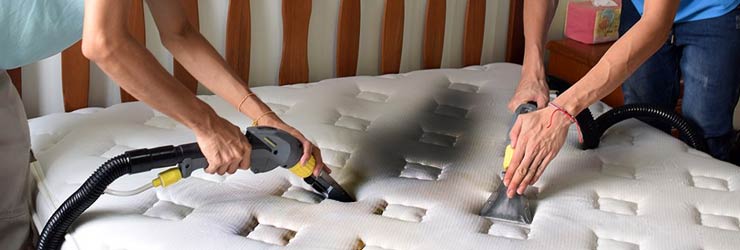
- Vacuum the surface using an upholstery attachment to lift loose spores. Dispose of the bag immediately outside.
- Mix a solution of equal parts white vinegar and warm water, or use a diluted hydrogen peroxide spray (3% concentration).
- Lightly dampen a cloth with the mix and blot — don’t scrub — the affected area. Scrubbing pushes mould deeper into the fabric.
- Sprinkle baking soda over the damp patch and leave for 30 minutes to absorb moisture and odour.
- Vacuum again, then leave the mattress in direct sunlight for at least 4–6 hours. UV light kills residual mould spores naturally.
Memory Foam Mattresses
Memory foam is porous and absorbs liquid quickly — which is exactly why mould spreads fast inside it. Never saturate memory foam with water or spray solutions. Instead, apply a lightly dampened cloth only to the surface, then dry immediately with a fan on low heat. If mould has penetrated beyond the surface layer, the mattress is very difficult to salvage safely.
Latex Mattresses
Natural latex resists mould better than foam, but it’s not immune. Use a mild detergent mix on the surface only. Avoid vinegar — it can degrade latex over time. Dry thoroughly before re-covering.
Pro Tip: After any mould treatment, run a dehumidifier in the bedroom for 24–48 hours. Australian bedrooms — especially in Queensland, coastal NSW, and Victoria’s wetter months — often sit above 60% relative humidity, which is the threshold where mould regrows even after cleaning.
One important rule applies to every mattress type: if mould has reached the inner layers or covers more than a 30cm patch, DIY cleaning won’t fix it. Surface treatment only removes what you can see — not what’s already colonised inside.
Cleaning Mould from Memory Foam Mattresses
Memory foam is one of the trickiest materials to deal with when mould strikes. Unlike traditional spring mattresses, memory foam is dense and non-breathable — meaning moisture gets trapped deep inside the foam layers where it can’t dry out easily. By the time you spot visible mould on the surface, the problem has often already spread further in.
What You Can Actually Do (and What You Can’t)
Surface mould on memory foam — the kind that appears as white or grey patches in the early stages — can sometimes be treated at home if caught quickly. But you need to be careful. Memory foam cannot be soaked, submerged, or steam-cleaned without causing permanent structural damage. Too much moisture during cleaning makes the problem worse, not better.
Pro Tip: Never use a wet cloth or spray bottle directly on memory foam. Instead, lightly dampen a cloth with your cleaning mix and blot — don’t rub. Rubbing pushes mould spores deeper into the foam.
For surface-level mould on memory foam, this method works best:
- Mix equal parts white vinegar and water in a spray bottle. Lightly mist a clean cloth — not the mattress directly.
- Blot the affected area gently, working from the outside of the mould patch inward to avoid spreading spores.
- Sprinkle baking soda over the damp area and leave for several hours to absorb residual moisture and odour.
- Vacuum thoroughly using an upholstery attachment, then air-dry the mattress in direct sunlight for at least 4–6 hours.
If the mould has penetrated deeper than the surface — or if you’re dealing with black mould on a memory foam mattress — DIY treatment is unlikely to be enough. At that point, a professional mattress cleaning service is the safer call. Professionals use low-moisture extraction methods designed specifically for foam materials, which remove mould without saturating the core.
One more thing: hydrogen peroxide (3% solution) is safe on memory foam and more effective than vinegar against stubborn mould spores. Apply it the same way — blot, don’t spray directly — and allow full drying time before putting any bedding back on.
Cleaning Mould from Latex Mattresses
Latex mattresses need a different approach to mould removal. Unlike memory foam or innerspring mattresses, latex is naturally antimicrobial — but it’s also highly sensitive to moisture. Use too much liquid during cleaning and you’ll push the problem deeper into the core, where it becomes nearly impossible to dry out.
What Makes Latex Different?
Latex is dense and slow to dry. That’s the core problem. When mould appears on the surface of a latex mattress, it’s often a sign that moisture has already been sitting inside the material for days. Surface cleaning alone won’t fix this — you need to address the moisture source at the same time.
Never soak a latex mattress. Avoid steam cleaners too. The heat and moisture combination can break down the latex structure over time and create the exact damp environment mould needs to spread.
Step-by-Step Latex Mould Removal
- Take it outside first. Direct sunlight is your best tool. UV exposure kills surface mould spores naturally. Leave the mattress in full sun for 3–4 hours if possible.
- Brush off dry mould carefully. Use a stiff-bristled brush and do this outdoors — never inside, where spores spread through the room.
- Apply a diluted white vinegar solution. Mix equal parts white vinegar and water. Lightly spray the affected area — don’t saturate. Vinegar kills mould without damaging latex.
- Blot, don’t scrub. Use a dry cloth to blot the area. Scrubbing spreads spores and pushes moisture further in.
- Dry completely before bringing it back inside. Use a fan on low heat or leave it in a well-ventilated area for several hours. The surface must be bone dry.
Pro Tip: Avoid hydrogen peroxide on latex mattresses. While it works well on other mattress types, it can degrade the latex material with repeated use, causing the surface to crumble or crack over time. Stick with diluted white vinegar for latex-safe mould treatment.
Cleaning Mould from Innerspring Mattresses
Innerspring mattresses are actually easier to treat than foam types — their open coil structure allows better airflow, which means mould rarely penetrates deep into the core. Most surface mould on an innerspring mattress can be addressed with the right approach, as long as you catch it early.
Step-by-Step Surface Treatment
- Take the mattress outside first. Work in direct sunlight if possible. UV exposure kills mould spores naturally and stops you spreading them through your bedroom.
- Vacuum all affected surfaces using an upholstery attachment. Dispose of the vacuum bag immediately in a sealed plastic bag.
- Mix a mix of white vinegar and water (equal parts) or use a diluted hydrogen peroxide spray (1 part 3% hydrogen peroxide to 2 parts water). Apply lightly — do not soak the fabric.
- Scrub gently with a stiff brush, working from the outside of the mould patch inward to avoid spreading spores.
- Blot dry with a clean cloth, then allow the mattress to air dry completely in the sun for a minimum of four hours before returning it indoors.
Pro Tip: Never use bleach on a mattress. It damages fabric fibres and leaves moisture behind — exactly the conditions mould needs to grow back. Hydrogen peroxide or white vinegar are safer and still effective against common mattress mould species.
When Surface Cleaning Isn’t Enough
If the mould has spread to the fabric seams, the underside, or the border panels, DIY cleaning won’t reach it fully. Black mould on an innerspring mattress that returns within a few weeks of cleaning is a sign the spores have moved deeper into the padding layers. At that point, weighing up DIY mould removal against professional cleaning costs is worth doing before you spend more time on a mattress that may need replacing anyway.
For light surface mould caught early, this process works well. But don’t rush the drying step — a damp innerspring mattress brought back inside too soon will grow mould again within days.
Australian Tenant Rights: Who Is Responsible for a Mouldy Mattress in a Rental?
This is where things get complicated — and where many Australian renters lose money they shouldn’t. Responsibility for a mouldy mattress in a rental property depends on who owns the mattress and what caused the mould. Get this wrong and you could either forfeit bond money unfairly or miss a legitimate compensation claim.
Landlord-Supplied Mattress vs. Tenant’s Own Mattress
If the landlord provided the mattress as part of a furnished rental, they’re responsible for ensuring it’s clean, safe, and fit for use at the start of the tenancy. If mould develops due to a structural issue — a leaking roof, poor ventilation, rising damp, or a flooding event — that’s the landlord’s responsibility to fix under residential tenancy laws across all Australian states.
But if you brought your own mattress and mould developed due to inadequate ventilation or lifestyle habits (like sleeping without a protector in a poorly aired room), that responsibility falls on you as the tenant.
Pro Tip: Document everything in writing. If you notice mould on a landlord-supplied mattress, send a written email to your property manager immediately with photos and timestamps. Under the Residential Tenancies Act in Victoria, NSW, and Queensland, landlords must maintain rental properties in a reasonable state of repair — and that includes addressing mould caused by structural defects.
What the Law Says in Each State
- Victoria: Landlords must ensure the property is in good repair. Mould linked to structural issues is the landlord’s responsibility under the Residential Tenancies Act 1997.
- Queensland: Under the Residential Tenancies and Rooming Accommodation Act 2008, landlords must fix mould caused by building defects promptly.
- NSW: Landlords are required to keep the property reasonably clean and fit for habitation under the Residential Tenancies Act 2010.
- Western Australia: Similar obligations apply — tenants can request urgent repairs if mould poses a health risk.
If your landlord ignores a written mould complaint, you can escalate to your state’s tenancy tribunal — VCAT in Victoria, NCAT in NSW, or QCAT in Queensland. Keep every message, photo, and repair request as evidence.
Preventing Mould From Coming Back: Long-Term Strategies for Australian Homes
Removing mould from your mattress is only half the job. Without fixing the conditions that caused it, you’ll be dealing with the same problem again within weeks. Australia’s humid climate — especially in coastal cities like Sydney, Brisbane, and Melbourne during summer — makes ongoing prevention non-negotiable.
Control Moisture at the Source
Body sweat is the number one cause of mattress mould. The average person releases up to 200ml of moisture per night while sleeping. A waterproof mattress protector stops that moisture from penetrating the foam or springs. Wash it every two weeks and replace it annually. This single habit prevents more mould problems than any spray or treatment.
Improve Airflow Around Your Mattress
Solid bed bases trap heat and moisture underneath your mattress — exactly the conditions mould needs. If you’re on a platform base or have your mattress on the floor, this is likely what caused your mould problem. Switch to a slatted bed base with gaps of at least 5cm between slats. This lets air circulate underneath and keeps the base of your mattress dry.
Pro Tip: Once a week, pull your mattress away from the wall and prop it up against the bed frame for 30–60 minutes. This airs out the underside and releases trapped moisture — takes two minutes and makes a real difference in humid months.
Keep Your Bedroom Environment Dry
- Run a dehumidifier in bedrooms during summer or in high-humidity areas like Queensland and coastal NSW. Aim for indoor humidity below 55%.
- Open windows daily for at least 20 minutes to flush out stale, moist air — even in winter.
- Don’t dry clothes indoors near the bedroom. This raises room humidity significantly and accelerates mould growth on soft furnishings.
- Check for leaks around windows and roof cavities. A slow drip you don’t notice can saturate a wall and spread mould spores across an entire room.
Schedule Professional Cleaning Annually
DIY maintenance keeps surface mould at bay, but dust mites, sweat residue, and embedded spores build up over time regardless. A professional steam cleaning vs dry cleaning comparison can help you decide which treatment suits your mattress type — both methods sanitise deep layers that home cleaning misses. Annual professional cleaning is especially important for households with young children, allergy sufferers, or anyone who’s previously had mould on a mattress.
Pro Tip: If mould has appeared once on your mattress, it will return unless you fix the moisture source. Cleaning the mattress without addressing bedroom humidity or base ventilation is a temporary fix at best.
Conclusion
Mould on your mattress isn’t just a cleaning problem — it’s a health risk that gets worse the longer you wait. The good news is that surface mould caught early can often be treated at home. But deep-set mould, recurring growth, or mould affecting anyone with asthma or allergies is a job for professionals.
- Act within 24–48 hours. Mould spreads fast in Australia’s humid climate, especially in coastal cities like Sydney, Brisbane, and Darwin. The longer you wait, the deeper it penetrates the foam.
- Prevention beats treatment every time. A mattress protector, regular airing, and a dehumidifier set below 50% humidity will squality most mould problems before they start.
- Know when to replace. If your mattress smells musty after cleaning, shows black or green patches larger than your palm, or is over 7–8 years old, replacement is the smarter call.
A clean, mould-free mattress means better sleep and better health. If you’re unsure how bad the damage is, a professional mould assessment costs A$150–A$300 and gives you a clear answer fast — often cheaper than a new mattress and far cheaper than an ongoing respiratory problem.
 How Much Does Professional Mattress Cleaning Cost? A Transparent Price Breakdown
 The Moisture Absorption Problem Explained
 Quality Mattress Protectors by Mattress Type
 Understanding the Two Methods: How Steam Cleaning and Dry Cleaning a Mattress Actually Work